[tintuc]

The Vertical Roller Mills (VRM) is a type of grinding machine for raw material processing and cement grinding in the cement manufacturing process in over the world.


 In Vietnam, VRM has been using in many cement plants and some thermal plants in particular. And it has been equipping more and more cement plants around the world because it brings many benefits on many sides in general.

(The history of VRM)


How does VRM Works?


VRM consists of some rollers and one table which is rotated by electric motor, and all of them work together for grinding raw material. 


In the very first beginning, raw materials are placed on the table. And the table begins to rotate, due to the action of centrifugal force of the rotation process, raw material automatically moves to surrounding area, enters grinding rollers slide(The gap between the rollers and the table's surface). Raw materials are crushed by extrusion, grinding and shearing. The rollers are driven by the friction between the table & raw materials. Due to such grinding, fine particles pass through the separator as the final product to the silo for the next process.


Even though there is only one working principle but each manufacturer would have different tech solutions for their own aim to optimize the grinding process, energy-efficient.


Why VRM needs to protecting by Wear resistance D-Parts


 Since in the heavy industry many pieces of equipment are frequently damaged because of having always been in impact, friction, abrasive condition. Especially, as you know the grinding process of VRM and even other processes are very harsh, any kind of equipment is also headed-on impact with raw materials which have sharp corners, even it has chemical compositions, heat erosion…


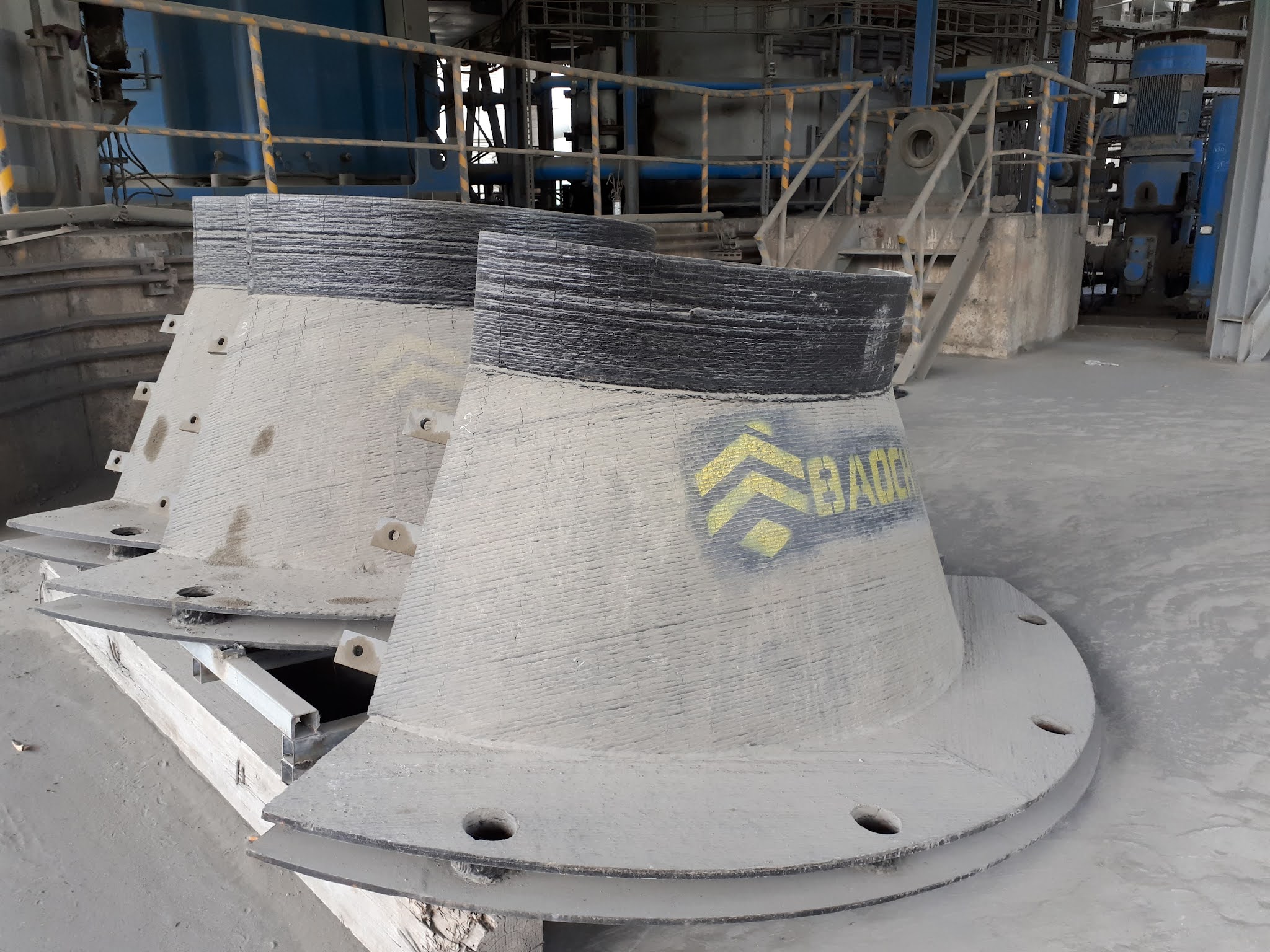
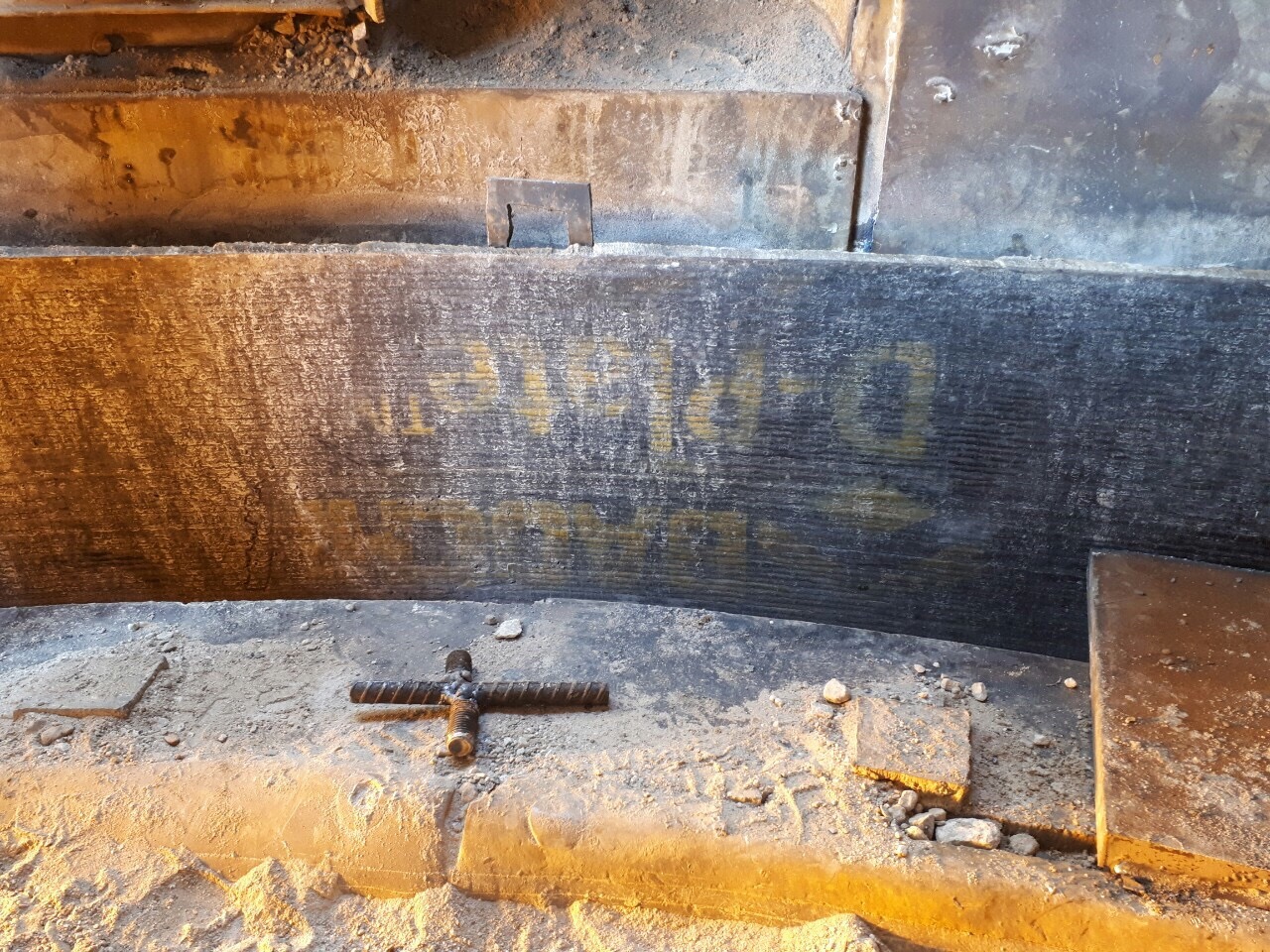
That's WHY D-Parts Wear resistance (Custom shapes unit from Chromium Carbide Overlay D-Plate) is one of the best solutions for repairs and extend the life of many types of equipment in VRM by protecting: hard carbide gives protection against wear, this wear being abraded in place of the core steel material of equipment.


  • Specifically designed and Available to form wear part in various shape
  • Outstanding wear-resistant property
  • Economical production cost
  • Impact resistance & Good temperature resistance
  • Good weldability to most structural steel

Where would D-Parts protect in VRM?


In the capacity of Wear-Plate(CCO Plate) manufacturer, Repairs & Maintenance service for many Vertical Roller Machine (VRM) in Vietnam. Whether VRM is new or in service, All our solutions are intended to provide high productivity and low maintenance costs, extend the life of machinery, equipment with cost-effective repairs..


- Hardfacing Wear-plate (D-Plate) - Wear-parts (D-Parts)

- Welding & Restoration service (D-Services)

- Automatic Welding System (BCM)


We believe that our Wear Plate is second to none in terms of durability and cost-effectiveness in Vietnam


Some projects that BCC has manufactured and supplied via LOESCHE Vietnam:

- Cement Vertical Mill project for Xuan Thanh Ha Nam Cement Plant, Ha Nam.

- Cement Vertical Mill project for Tan Thang Cement Plant, Nghe An.

- Cement Vertical Mill project for an additional Mill project Bim Son Cement Plant, Thanh Hoa.

- Cement Vertical Mill project for an additional Mill project Vicem Hoang Thach Cement Plant.

In addition, our service range of Cement industry more and more in Vietnam by BCC’s dedicated, professional services and Professional capability.


[/tintuc]

[tintuc]

Welding & Restoration project of Crushing Cone (Cone Crusher)
𝗜𝗻𝗱𝘂𝘀𝘁𝗿𝘆: Mining sector (Vietnam)
𝗣𝗿𝗼𝗯𝗹𝗲𝗺: Crushing Cone is worn-out
𝗣𝗿𝗼𝗱𝘂𝗰𝘁𝘀 𝗨𝘀𝗲𝗱:
- HardcoredNM14 2.8mm
- Hardcored101 2.8mm


Crusher may be used to reduce the large size materials into smaller size materials for making them usable in construction or industrial use, or for extraction of valuable minerals trapped within an ore matrix...

Types of crushers:
  1. Jaw crusher
  2. Gyratory crusher
  3. Cone crusher
  4. Roller crusher
  5. Hammer crusher

Types of crushers: 

"Crushing devices hold material between two parallel or tangent solid surfaces, and apply sufficient force to bring the surfaces together to generate enough energy within the material being crushed so that its molecules separate from (fracturing), or change alignment about (deformation), each other. "
- That's the reason why some elements from Crusher are frequently damaged because of having always been in impact, abrasive environment.
And Welding a wear resistance is one of the best ways to solved the problem. (best means effective, convenient, less cost, and save time..).

Before Welding & Restoration


chuẩn bị bề mặt, gá lắp trước khi hàn


Hàn hoàn thiện


Welding & Restoration project of Crushing Cone


PLEASE CONTACT BCC IF YOU HAVE ANY PROBLEM NEED THE SOLUTION ESPECIALLY IN THE HEAVY INDUSTRY FIELDS: Cement Industry, Power Industry (Thermal Power Plant, Coal Power Plant), Steel Industry, And the Mining Industry...


[/tintuc]

[tintuc]
  • WHAT IS D-PLATE?


𝑫-𝑷𝒍𝒂𝒕𝒆 is a hardfacing wear plate, As the name indicates it is a plate used where abrasive wear is in action. Depends on the region it has other names such as Chromium Carbide Overlay plate(CCO) or which is called- "Abrasion resistant steel wear plate(AR Plate)"

D-Plate (Hardfacing Wear plate, Chromium Carbide Overlay plate, CCO Plate, Powder Overlay Process Plate, POP Plate...)


𝑫-𝑷𝒍𝒂𝒕𝒆 has already been using in many areas of industry, such as Cement Industry, Power Industry (Thermal Power Plant, Coal Power Plant), Steel Industry, and the Mining Industry... Since in the heavy industry many pieces of equipment are frequently damaged because of having always been in impact, abrasion condition and that's WHY Chromium Carbide Overlay D-Plate is one of the best solutions for repairs and extend the life of equipment by protecting: hard carbide gives protection against wear, this wear being abraded in place of the core steel material of equipment. 

The composition of wear plate (D-Plate)?

𝑫-𝑷𝒍𝒂𝒕𝒆 consists of 2 components:

- Mild steel base plate and onto which would be welded overlay material - one or two layers of highly abrasive resistant chromium carbide (that is overlaid by using high-quality welding wires with Open-Arc welding, Sub-Arc Welding)

*Chemical composition of D-Plate’s overlay materials depends on various applications requested by the particular condition.

Structure of wear plate (D-Plate)


Manufacturing a D-Plate (CCO plate) is not an easy process.  It requires extreme dedication to being day by day upgraded, to shape for the various custom parts of any equipment, to wear abrasion resistance for a longer time, save downtime, and cost-effectiveness while the customers need abrasion resistance solution and repairs.


How to make Hardfacing Wear Plate (D-Plate)?

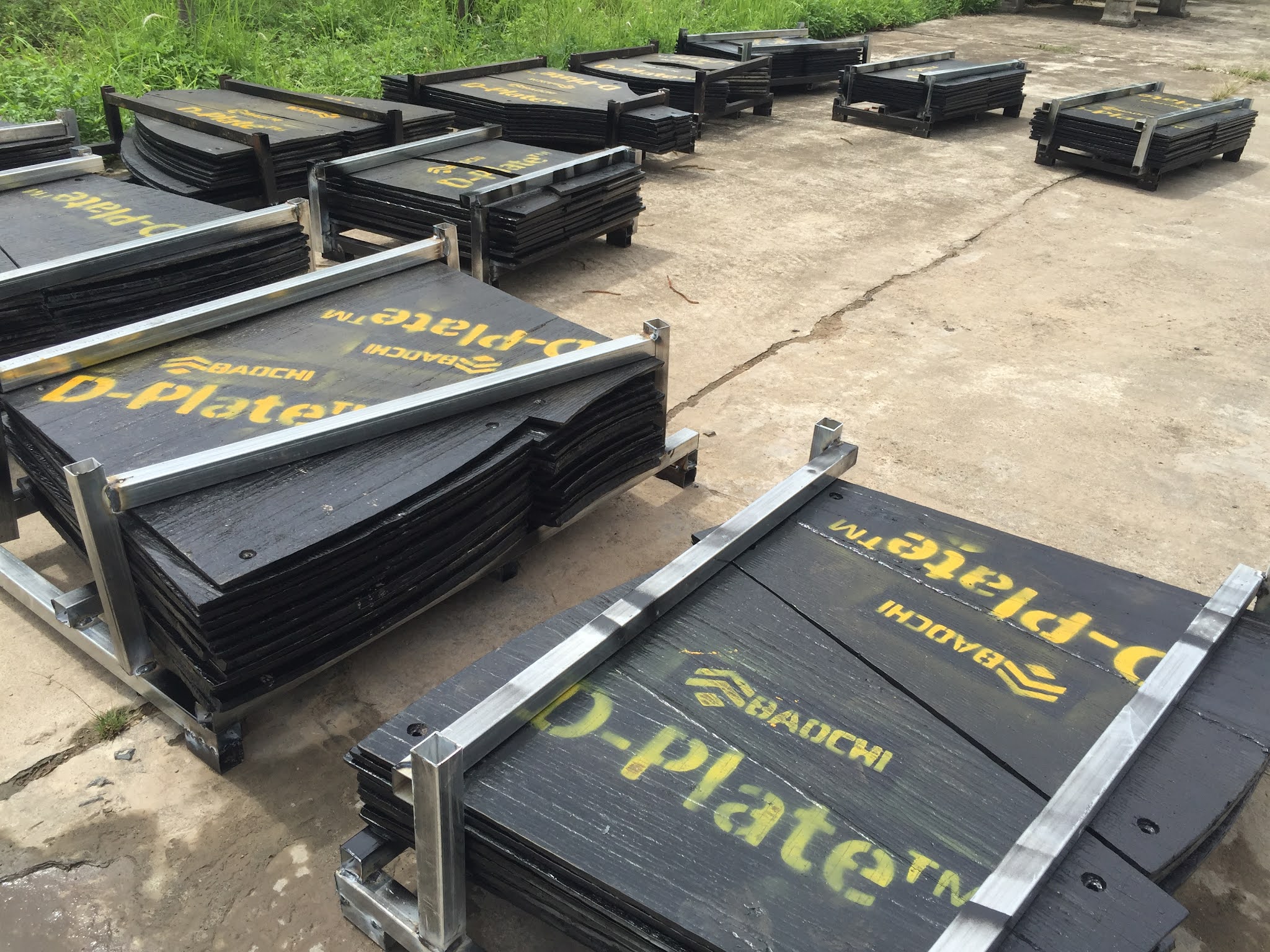
( Wear-Plates were packed before delivery to the customer)

Nowadays, in the world, there are 2 methods of producing Chromium Carbide Overlay Plate(CCO).

1. Plat Process:

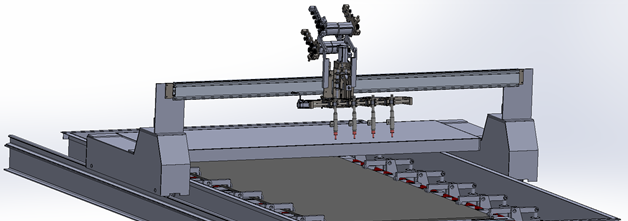
Mild steel plate is wedged on the fixed plat table (By wedge equipment or magnet system). And then, The tip of the Soldering iron move to 2 axes (X - Y: horizontally and vertically) to weld the entire surface of the plate.

(Plat process to made Wear Plate, CCO D-Plate)


2. Rotary Drum Process:

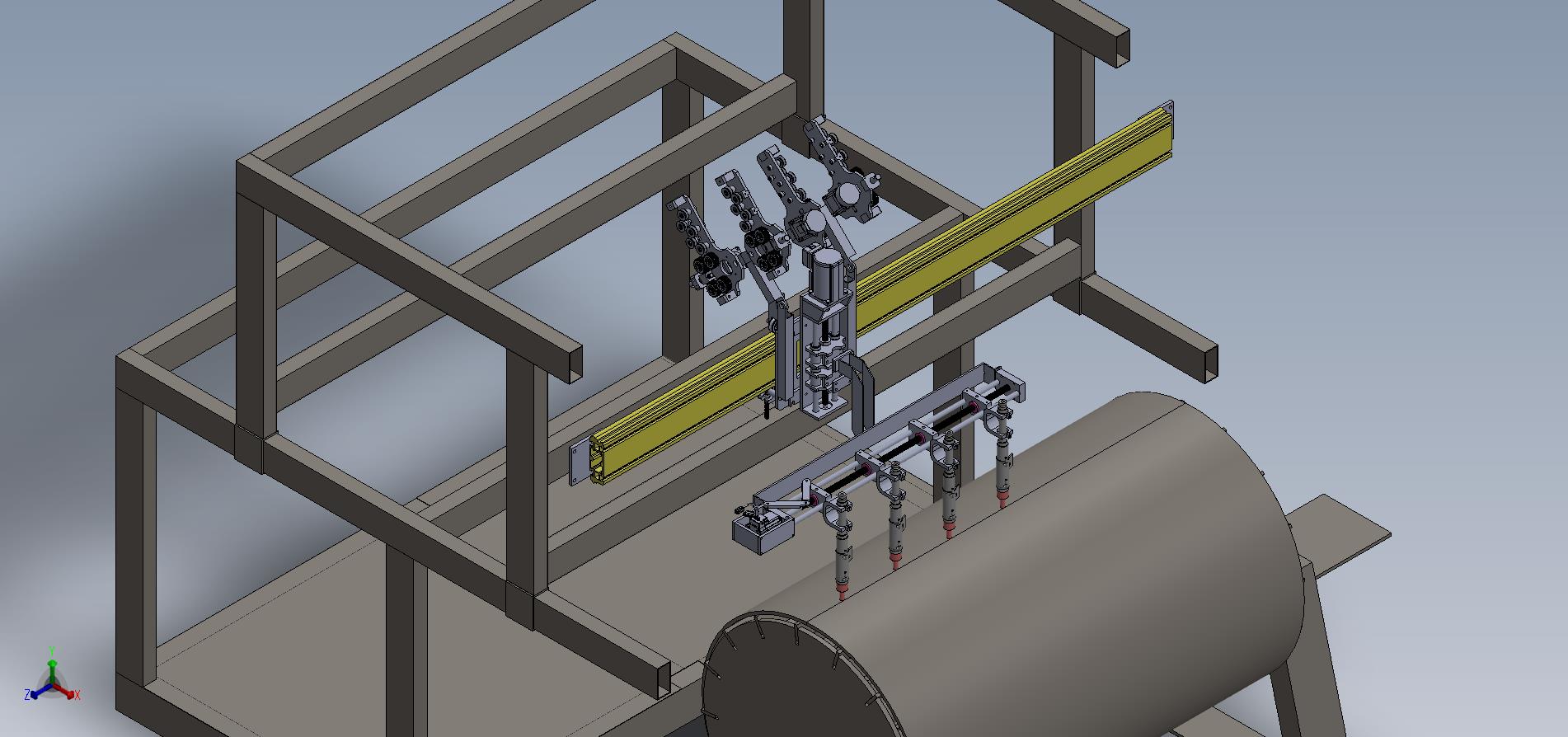
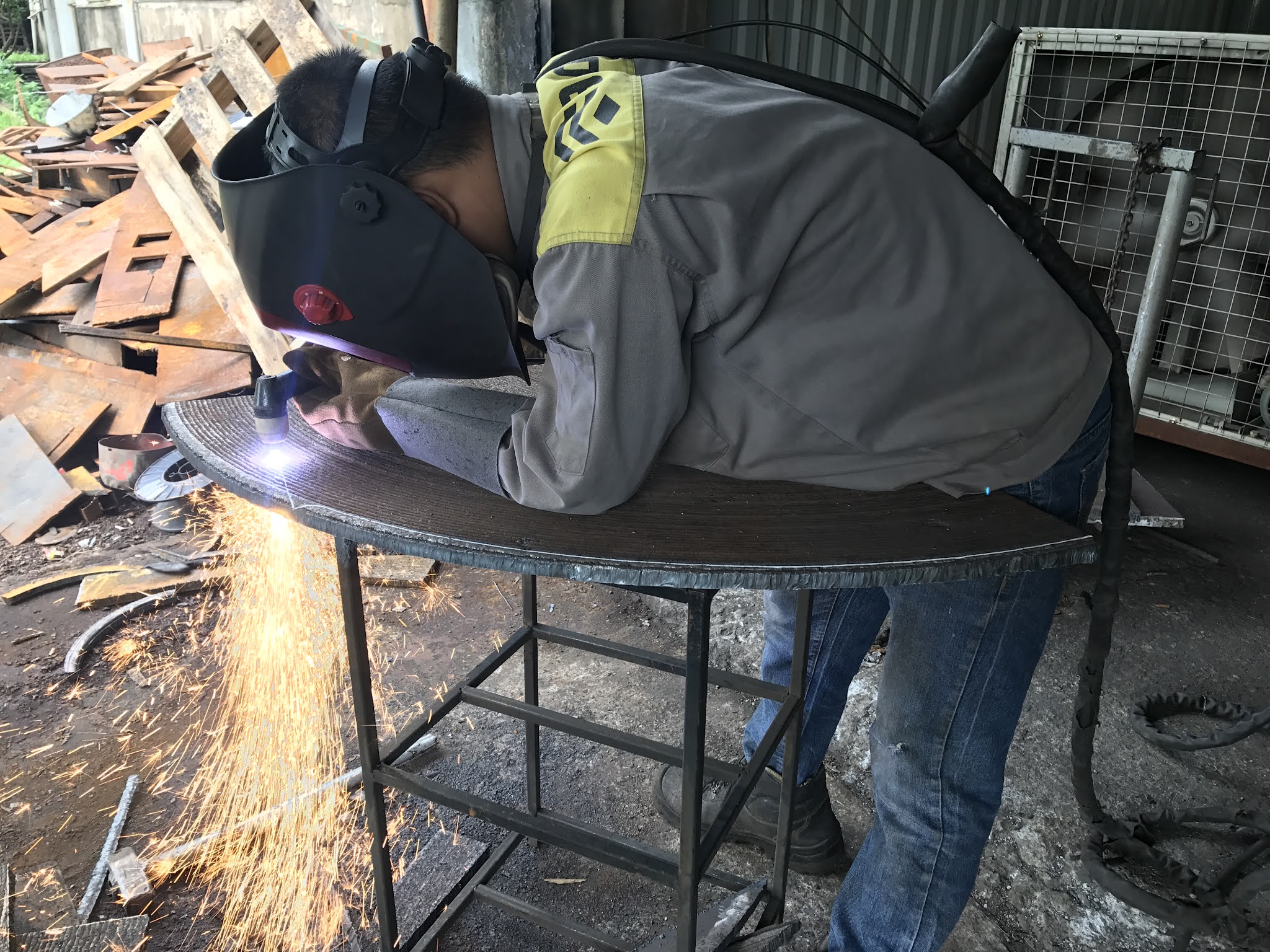
Mild steel plate is bent to become cylinder or whatever curved shape in custom. It would be move rotary and the tip of the soldering iron could stand upright or move horizontally to weld the entire surface. All the welding processes must follow the strict pace is calculated by engineers to ensure that not being cracked, or glitches...

(Rotary Drum process to made Wear Plate, CCO plate & AR plate)


 This is BCC’s process to manufacturing D-Plate.


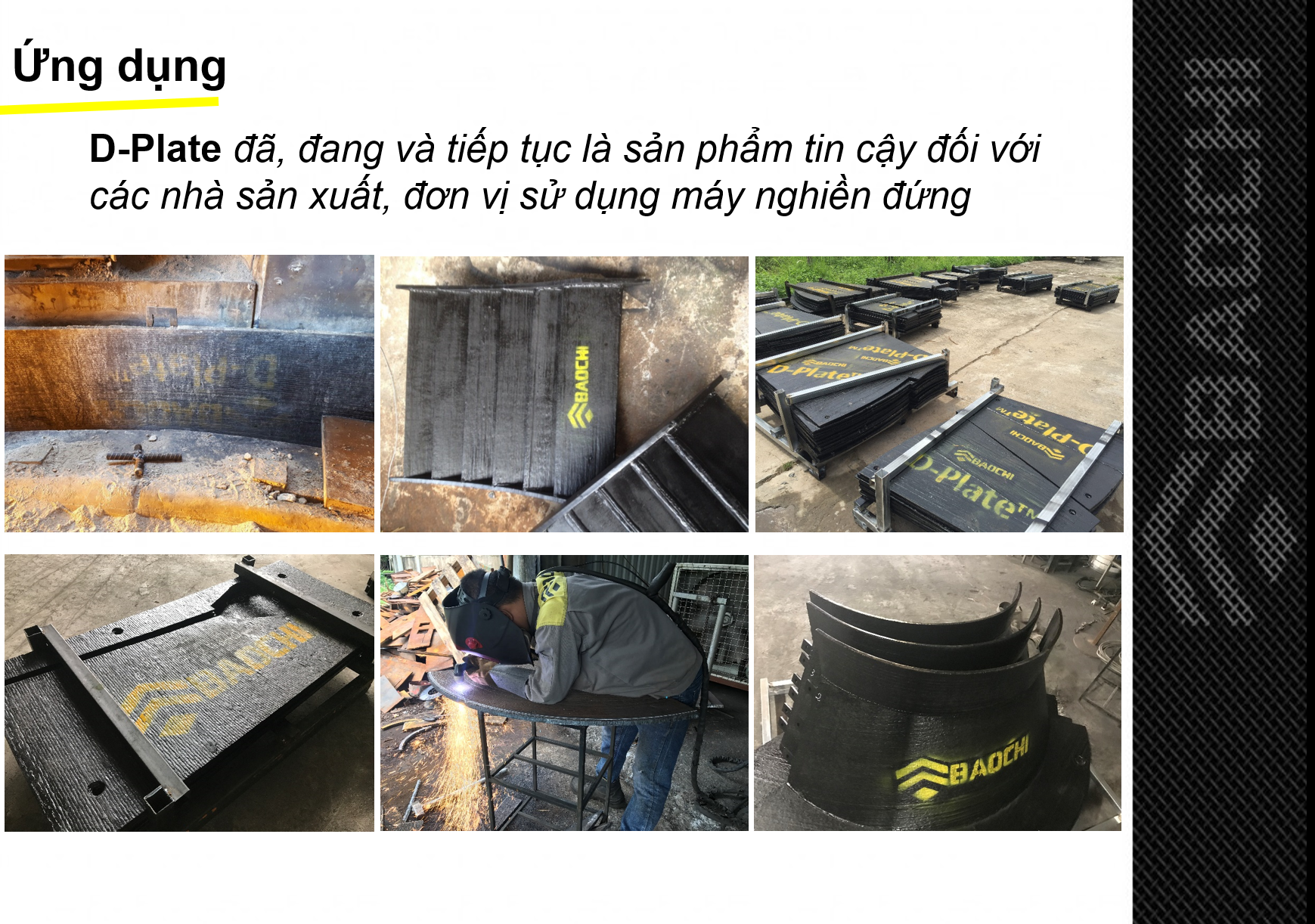
Applications of D-Plate, Chromium Carbide Overlay plate(CCO), or Abrasion resistant steel wear plate (AR Plate)

Examples of machines or components that might require wear plates or liners are:

  • Crushers
  • Shredders
  • Casting equipment
  • Steel and aluminum mill equipment
  • Heavy earthmoving and mining equipment

Other applications for abrasion resistant steel include:

  • Wear blades
  • Choppers
  • Scrapers
  • Mining tools
  • Chippers
  • Punch press applications
  • Punch press applications
  • Wear rings
  • Wear segments
  • Bucket scrapers


Why D-Plate is one of the best solutions for Abrasion in the heavy industry?

  • Outstanding wear-resistant property (Chromium Carbide Overlay)
  • Economical production cost (Protecting and extending the life of equipment in service)
  • Available to form wear part in various shapes for all types of equipment (D-Parts)
  • Moderate impact resistance & Good temperature resistance
  • Good weldability to most structural steel

For the best quality, particularly abrasion resistance, both hard and tough, long-life service...All 𝑫-𝑷𝒍𝒂𝒕𝒆 are Manufactured From BCC in Vietnam are made following the strict process of automatic welding systems and then would be tested by a special quality management system, ensuring higher and better quality products: based on ASTM G65 (Abrasive Wear Test).


More details at downloadable filesD-Plate Introduction & Test result of standard D-Plate

[/tintuc]


 [tintuc]


The ASTM G65 standard established the laboratory method of determining the relative abrasion resistance of various materials.

  • A small sample of the material to be tested is used
  • The sample is pressed against a rubber wheel using a lever arm
  • The lever arm provides a controlled/known force
  • Sand falls onto the wheel at the sample
  • The sand is forced along the surface of the sample by the wheel, causing abrasion
  • The force of the lever arm and length of the test can vary

When performing the test, the environment is tightly controlled, as temperature, humidity, abrasive sand particle geometry, etc. will all have large impacts on test results

Abrasive factor: The sand is introduced between a vertically oriented rubber wheel rotating at a specific speed and the specimen, which is held against the wheel at a specified normal load. Abrasive factors can be changed depending on the particular condition, the environment of the equipment, field industry

* The materials testing can be used are metal, ceramic, plastic, composite or coating....


 Which have been extensively used to measure wear resistance of hardfacing, Wear-plate, CCO plate....  For the best quality, particularly abrasion resistance, both hard and tough, long-life service...All D-Plate , D-Parts (Wear resistance steel plate) are Manufactured From BCC (BaoChi Corp) in Vietnam are made following the strict process of automatic welding systems and then would be tested by a special quality management system, ensuring higher and better quality products: based on ASTM G65 (Abrasive Wear Test)...


Abrasion test system

Test parameters:

Size of the sample : 25.4 x 76.2 x 3.2-12.7 mm
Abrasive factor: Alumina
Abrasive flow::  30-600 gr/min.
Contact force: 20, 130, 250 N
Diamater wheel:: 718 to 4309 m
Wheel: St37, CK45, GG25, X155


ASTM G65: Standard Test Method for Measuring Abrasion Using the Dry Sand/Rubber
Wheel Apparatus
ASTM B611: Standard Test Method for Abrasive Wear Resistance of Cemented Carbide

[/tintuc]

+84-898-471122